
culture
Is Kaluga or Osetra Caviar Better? | Caviar Kitchen
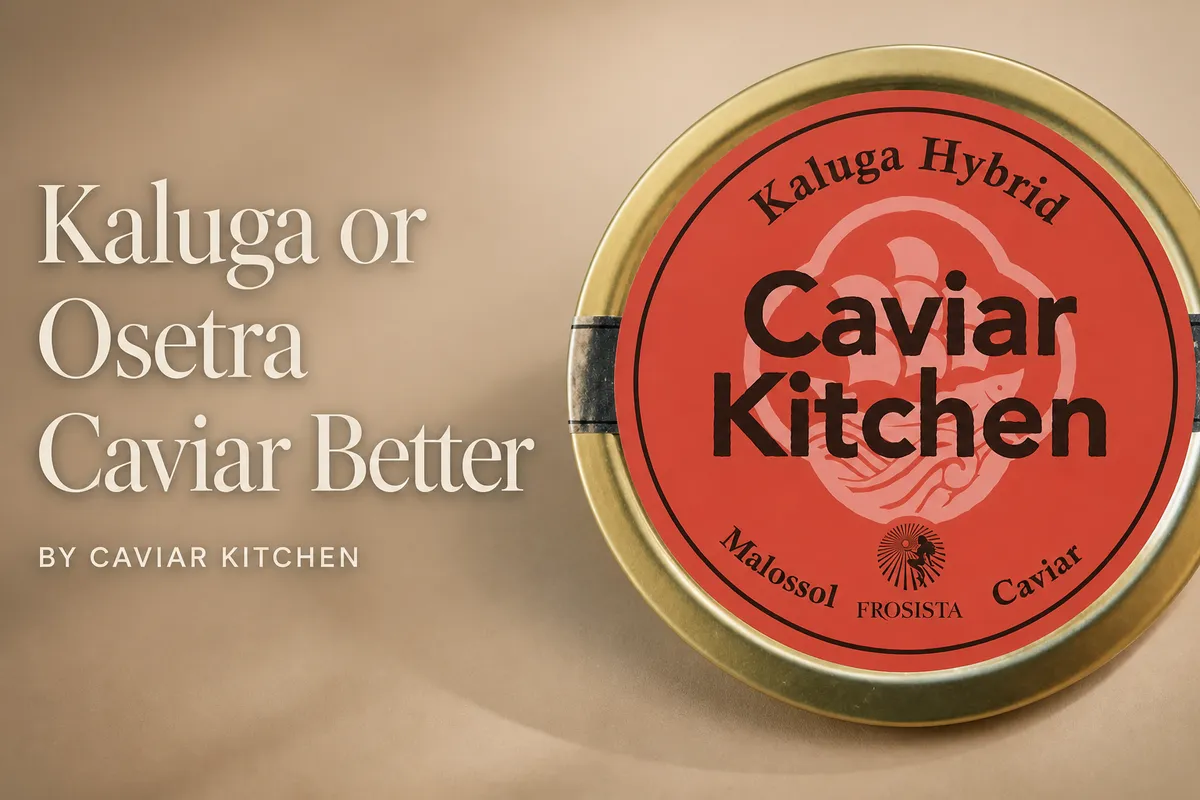
Is Kaluga or Osetra Caviar Better?
Kaluga Hybrid wins for richness and grain size — its eggs run roughly 3–4 mm across, noticeably larger than Ossetra's 2–3 mm, and the flavour is buttery and sweet with almost no briny edge. Ossetra wins for complexity: a firmer pop, a nutty finish, and a flavour that changes as it sits on your tongue. Neither is objectively better. The right answer depends entirely on what you're eating it with and how you like your caviar to feel.
Kaluga vs Osetra: The Core Differences at a Glance
Kaluga Hybrid (Huso Dauricus × Schrenckii) produces large, pale-to-dark eggs with a soft, yielding pop and a clean buttery finish. Ossetra (Acipenser gueldenstaedtii) produces medium eggs with a firmer shell, a golden-to-brown colour range, and a distinctly nutty, slightly briny character that deepens over 20–30 seconds on the palate. Both are farmed sturgeon; both are true caviar by any definition.
| Feature | Kaluga Hybrid | Ossetra |
|---|---|---|
| Species | Huso Dauricus × Schrenckii | Acipenser gueldenstaedtii |
| Grain size | Large (≈ 3–4 mm) | Medium (≈ 2–3 mm) |
| Shell / pop | Soft, yielding | Firm, snappy |
| Colour range | Pale grey to dark charcoal | Golden brown to dark brown |
| Flavour profile | Buttery, sweet, clean finish | Nutty, complex, mild brine |
| Fat content | Higher — longer melt on palate | Moderate — drier finish |
| Years to harvest | 8–12 years | 7–10 years |
| Best for | First-timers, chip-and-blini pairings | Experienced palates, savoury dishes |
What Does Kaluga Hybrid Actually Taste Like?
Kaluga Hybrid is the variety most often compared to Beluga — the large-grain, soft-pop benchmark that has been banned from import in North America since 2005. The comparison holds up on texture: both give you a gentle, almost creamy burst rather than a sharp crack. Kaluga's flavour is sweet and clean, finishing with a light butteriness that lingers without turning fishy. It's the caviar that converts skeptics.
- Grain size: visibly large — you notice it immediately on the spoon
- Pop: soft and yielding, not sharp
- Flavour: buttery, mildly sweet, very low brine
- Fat content: high — the richness coats the palate
- Best pairings: plain potato chips, unsalted blini, crème fraîche
- Who it suits: first-time buyers, anyone who finds brine off-putting
We see Kaluga ordered most often by customers buying their first 30 g tin — the grain size makes it feel like a genuine event even on a Wednesday night. If you want a starting point for how to eat caviar without overthinking it, Kaluga is the forgiving choice.
What Does Ossetra Actually Taste Like?
Ossetra is the species that caviar regulars tend to reach for once they've moved past the novelty stage. The grain is smaller and firmer than Kaluga's, the pop is more assertive, and the flavour has layers — a mild brine upfront, a hazelnut or walnut note in the middle, and a clean dry finish. It's not more intense so much as more specific.
- Grain size: medium — elegant rather than dramatic
- Pop: firm and snappy
- Flavour: nutty, slightly briny, complex finish
- Fat content: moderate — cleaner on the palate than Kaluga
- Best pairings: scrambled eggs, deviled eggs, pasta, anything with fat or acidity to play against
- Who it suits: confident home cooks, anyone who already likes the briny side of the sea
Ossetra is the species that rewards weeknight recipe use — its firmer grain holds up when folded into warm pasta or spooned onto a hot egg, where a softer Kaluga might lose definition. That's not a knock on Kaluga; it's just a structural fact about how the two eggs behave under heat.
Which Caviar Is Better for Beginners?
Kaluga Hybrid is the better starting point for 3 concrete reasons: the large grain is visually dramatic and immediately satisfying, the soft pop is forgiving if you're not sure what to expect, and the low brine means there's no sharp flavour to push through before you get to the good part. A 15 g tasting portion on a plain chip tells you everything you need to know about whether caviar is for you — and Kaluga makes that answer almost always yes.
That said, if you've already eaten smoked fish, anchovies, or good miso regularly, Ossetra won't feel like a stretch. The brine is subtle. Honestly, the bigger barrier for most first-timers is the serving ritual, not the flavour — and our caviar guide strips that down to three steps.
Kaluga vs Osetra vs Beluga: Where Do They Sit?
Beluga (Huso huso) is the reference point everyone uses, but it's unavailable for legal import in North America. Kaluga Hybrid fills that gap — same genus (Huso), similar grain size, comparable fat profile. Ossetra sits in a different register entirely: smaller, nuttier, more savoury. Think of it this way:
- Beluga (Huso huso): the benchmark — unavailable in North America
- Kaluga Hybrid: closest legal substitute for Beluga; large grain, buttery
- Huso Dauricus: pure species version of the Kaluga parent; slightly more mineral
- Ossetra: medium grain, nutty, complex — a different flavour family entirely
- Baerii (Siberian Sturgeon): small grain, light and clean — the most delicate of the five
- Schrenckii: firm grain, earthy, often compared to a younger Ossetra
For a full species breakdown with tasting notes for all five, the Caviar Kitchen species guide covers each one in detail.
Things to Know Before You Choose
A few practical points that don't always make it into comparison articles:
Serving temperature matters more than species. Both Kaluga and Ossetra should be served between 0°C and 4°C. Warm caviar loses structural integrity fast — the grain softens and the flavour flattens. Keep the tin on ice or in the coldest part of your fridge right up until you open it.
Spoon material changes the flavour. Metal spoons — silver included — react with caviar and push a metallic note into the finish. Use mother-of-pearl, bone, or even a clean plastic spoon. This is especially noticeable with Ossetra, where the nutty notes are subtle enough to be masked by a metallic edge.
Portion size is smaller than you think. A 30 g tin serves 2 people as a centrepiece tasting. A 15 g portion works as an appetiser for one. If you're hosting a dinner party and want caviar as a course rather than a garnish, plan on 28–30 g per person. Our how-to guide has the full portion breakdown.
Once opened, use it quickly. Fresh caviar keeps 24–48 hours after opening; pasteurised keeps 3–5 days. Neither species holds longer than that once the seal is broken. If you're trying both Kaluga and Ossetra on the same occasion, open them one at a time.
Sourcing is the variable competitors rarely name. Both species are farmed. The quality difference between a well-managed farm and a poorly managed one is larger than the difference between species. Our caviar comes from sturgeon farms in south-west China — Sichuan region — farming since 2006, with EU and US export certification. You can read more about how we source if provenance matters to your decision.
If you're in Toronto or the GTA, both species are available for cold delivery or Yorkville pickup — no minimum order, no special occasion required. Browse the current selection and check live availability in the shop.
Frequently Asked Questions
- What is better, Kaluga or Osetra?
- Kaluga Hybrid is better for first-timers and anyone who prefers a large, buttery, low-brine grain. Ossetra is better for experienced palates and savoury cooking — its firmer pop and nutty finish hold up in dishes where Kaluga's softer grain can lose definition. Neither is universally superior.
- Is Kaluga caviar the best?
- Kaluga Hybrid is widely considered the closest legal substitute for Beluga in North America, which makes it the benchmark for grain size and butteriness. Whether that makes it "the best" depends on your palate — if you prefer complexity and brine over richness and sweetness, Ossetra or Schrenckii may suit you better.
- Is Osetra the best caviar?
- Ossetra is one of the most consistently praised species for flavour complexity — its nutty, layered finish is what draws experienced caviar eaters back repeatedly. It is not the largest grain or the most dramatic on the spoon, but for pure flavour depth it competes with anything available in North America.
- What is considered the best brand of caviar?
- "Best brand" varies by region, sourcing standards, and species range. The most important factors are farm certification (EU or US export standards), honest species labelling — Kaluga Hybrid, Ossetra, Baerii — rather than vague grade names, and cold-chain integrity from tin to table. Visit the shop to see our current range and sourcing details.
- (common question we hear) How much caviar do I need per person for a tasting?
- Plan on 15 g per person for an appetiser portion and 28–30 g per person if caviar is the centrepiece. A 5–10 g taste is enough to compare two species side by side. See the full serving and portion guide for dinner-party planning.
Caviar Kitchen Editorial
Caviar Kitchen Editorial
Frequently asked
What is better, Kaluga or Osetra?
Kaluga Hybrid is better for first-timers and anyone who prefers a large, buttery, low-brine grain. Ossetra is better for experienced palates and savoury cooking — its firmer pop and nutty finish hold up in dishes where Kaluga's softer grain can lose definition. Neither is universally superior.
Is Kaluga caviar the best?
Kaluga Hybrid is widely considered the closest legal substitute for Beluga in North America, which makes it the benchmark for grain size and butteriness. Whether that makes it "the best" depends on your palate — if you prefer complexity and brine over richness and sweetness, Ossetra or Schrenckii may suit you better.
Is Osetra the best caviar?
Ossetra is one of the most consistently praised species for flavour complexity — its nutty, layered finish is what draws experienced caviar eaters back repeatedly. It is not the largest grain or the most dramatic on the spoon, but for pure flavour depth it competes with anything available in North America.
What is considered the best brand of caviar?
"Best brand" varies by region, sourcing standards, and species range. The most important factors are farm certification (EU or US export standards), honest species labelling — Kaluga Hybrid, Ossetra, Baerii — rather than vague grade names, and cold-chain integrity from tin to table. Visit the shop to see our current range and sourcing details.
(common question we hear) How much caviar do I need per person for a tasting?
Plan on 15 g per person for an appetiser portion and 28–30 g per person if caviar is the centrepiece. A 5–10 g taste is enough to compare two species side by side. See the full serving and portion guide for dinner-party planning.