
culture
What are the signs that caviar has gone bad? | Caviar Kitchen
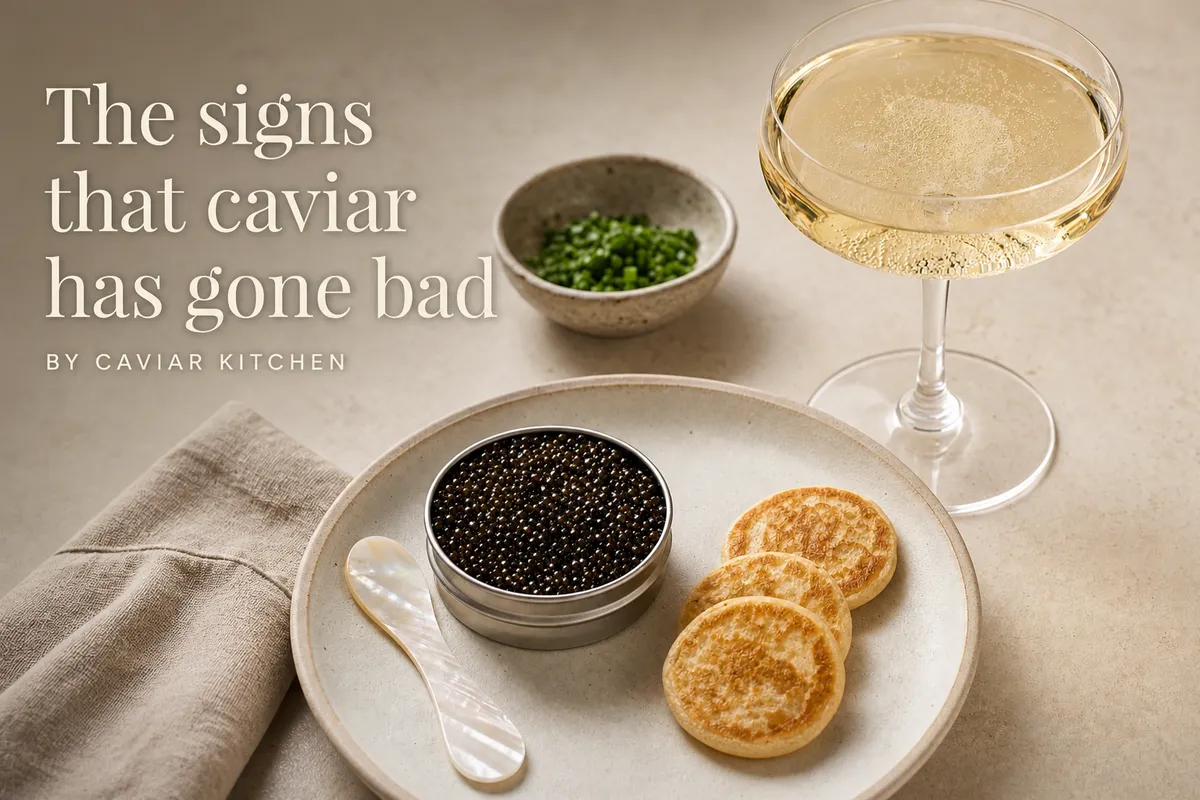
What are the signs that caviar has gone bad?
Caviar has gone bad when it produces a sharp, ammonia-like or sour smell — and 4 other sensory cues confirm it before you take a single bite. Fresh sturgeon roe smells clean, briny, and faintly oceanic. Anything that makes you pull back from the tin is a warning worth trusting. Here is exactly what to check, in order.
The 5 signs caviar has gone bad
Spoiled caviar signals itself through smell first, then texture, then appearance — in that order of reliability. A tin that passes the smell test but shows 2 or more of the other signs below should still be discarded. Trust the pattern, not a single cue in isolation.
- Sharp or ammonia smell — fresh caviar smells like a clean sea breeze; a sour, fermented, or chemical edge means bacterial breakdown has started.
- Mushy or burst eggs — intact eggs should hold their shape and pop cleanly; collapsed or paste-like texture means cell walls have broken down.
- Dull, grey, or discoloured surface — healthy roe is glossy and dark; a matte, greyish or brownish cast is a sign of oxidation or age.
- Excessive liquid pooling in the tin — a small amount of natural brine is normal; a watery puddle means the eggs have wept fluid and begun to degrade.
- Flat or off flavour — if smell and texture pass but the taste is bitter, metallic, or simply wrong, stop eating and discard the rest.
Any single sign from numbers 1, 2, or 5 is enough on its own. Signs 3 and 4 together — without a smell issue — still warrant caution, especially if the tin has been open for more than 48 hours.
How long will caviar last in the refrigerator?
Unopened fresh caviar stored at 0–2 °C lasts up to 4 weeks from the pack date; once opened, the window shrinks to 24–48 hours for fresh and 3–5 days for pasteurised. These are not conservative estimates — they reflect real cell-wall integrity at refrigeration temperature, not a liability buffer. Understanding how to handle caviar correctly from the moment you open the tin is the single biggest factor in whether you hit the top or the bottom of that range.
| Type | Sealed / unopened | After opening | Key condition |
|---|---|---|---|
| Fresh (malossol) | Up to 4 weeks | 24–48 hours | 0–2 °C, coldest fridge shelf |
| Pasteurised | Up to 12 months (sealed) | 3–5 days | 0–4 °C; refrigerate after opening |
| Opened tin, door shelf | N/A | Under 24 hours | Door fluctuates 4–7 °C — shortens life significantly |
The fridge door is the enemy. Temperature swings every time the door opens, and even 1–2 °C above the ideal range accelerates the bacterial activity that produces that telltale sour smell. Store the tin on the back shelf, ideally resting on a small bed of crushed ice inside a bowl. That one habit keeps fresh caviar tasting correct right up to the 48-hour mark.
How to tell if caviar is expired before you open it
Three checks work on a sealed tin: the best-before date, the lid integrity, and the sound test. A tin with a compromised vacuum seal will feel slightly soft when pressed at the centre of the lid rather than taut and firm. If the lid flexes noticeably, the seal has been broken at some point — treat it as opened. Our full species and storage guide covers what each species looks like at peak condition, which makes spotting the off-state easier.
- Check the best-before date — the starting point, not the whole answer.
- Press the lid centre — firm and taut means vacuum intact; flex means compromised.
- Inspect the rim — any brine residue around the seal suggests leakage or a past opening.
- Smell immediately on opening — your first impression in the first 2 seconds is the most reliable read you will get.
Honestly, the smell-on-opening test is more reliable than any date stamp. Best-before dates assume correct cold-chain handling the entire way from packing to your fridge — and a tin that spent an afternoon at room temperature during shipping has effectively lost days of shelf life regardless of what the label says. For Toronto and GTA orders, our cold-chain delivery keeps the tin at temperature right to your door, which means the date on the tin is actually meaningful rather than aspirational.
Does caviar go bad if not refrigerated?
Yes — and faster than most people expect. At room temperature (around 20 °C), fresh caviar begins to degrade within 2–4 hours. Pasteurised caviar holds longer but is not shelf-stable once opened. The practical rule: if a tin has been sitting out through a dinner party — say, 2 hours at a warm table — eat what remains immediately or discard it. Do not re-refrigerate and return to it the next day. For serving guidance that keeps the tin cold while still looking good on the table, the how to eat caviar page covers the ice-bowl method that most restaurants use.
What to do if you suspect your caviar has gone bad
Discard it. That is the whole answer. Spoiled roe is not a situation where cutting away the bad part works — bacterial contamination is distributed through the entire tin once it starts, not localised to one corner. If you are uncertain, the smell test is definitive: trust your nose over the date stamp, over the colour, over any other signal. A tin that smells wrong is wrong.
The tricky part is that slightly past-peak caviar — not yet spoiled but no longer at its best — will taste flat and lack the clean brine-and-sea flavour that makes it worth eating. That is not a food-safety issue, but it is a quality one. If you are working out how much caviar to buy per sitting so you are not left with a half-tin overnight, the general guide is 28–30 g per person as a centrepiece portion and 15 g as an appetiser. Buying to that quantity means you are less likely to face the leftover problem in the first place.
For sourcing context — why farmed sturgeon caviar from traceable operations has a more consistent shelf life than wild-caught alternatives — our sourcing page explains how the packing process affects freshness from day one. And if you want to put a newly opened tin to immediate use rather than store it, the recipes section has weeknight ideas that work with any species, from Baerii to Kaluga Hybrid.
Frequently asked questions
- What happens if I eat spoiled caviar?
- Eating spoiled caviar can cause food poisoning symptoms — nausea, vomiting, stomach cramps, and diarrhoea — typically within 1–6 hours of consumption. The risk comes from bacterial growth, particularly in protein-rich roe that has been stored above 4 °C. If symptoms are severe or persist beyond 24 hours, seek medical advice. When in doubt, discard the tin.
- How to tell if caviar is expired?
- Check the best-before date first, then open the tin and smell immediately. Fresh caviar smells clean and briny; expired caviar smells sour, ammonia-like, or rancid. Also check texture — eggs should be firm and intact, not mushy or burst. A combination of off-smell and soft texture confirms the tin is past safe use.
- What happens if I eat old caviar?
- Old caviar that is past peak but not fully spoiled will taste flat, bitter, or metallic rather than clean and briny — a quality issue rather than an immediate safety one. Caviar that has crossed into spoilage carries genuine food-poisoning risk. The distinction is smell: flat flavour without a bad smell is quality loss; a sour or ammonia smell means discard immediately.
- How long will caviar last in the refrigerator?
- Unopened fresh caviar lasts up to 4 weeks at 0–2 °C. Once opened, fresh caviar should be consumed within 24–48 hours; pasteurised caviar within 3–5 days. Store the tin at the back of the fridge — never in the door — and keep it covered directly with cling film pressed against the surface of the eggs to limit air contact.
- (common question we hear) Does caviar go bad if not refrigerated?
- Yes. Fresh caviar left at room temperature begins to degrade within 2–4 hours. Pasteurised caviar is more tolerant but is not shelf-stable once opened. If a tin has been sitting out at a dinner table for 2 or more hours, eat what remains immediately or discard it — do not re-refrigerate and serve again the following day.
Browse the current selection at Caviar Kitchen — tins are packed to order and delivered cold across the GTA, or available for pickup in Yorkville.
Caviar Kitchen Editorial
Caviar Kitchen Editorial
Frequently asked
What happens if I eat spoiled caviar?
Eating spoiled caviar can cause food poisoning symptoms — nausea, vomiting, stomach cramps, and diarrhoea — typically within 1–6 hours of consumption. The risk comes from bacterial growth, particularly in protein-rich roe that has been stored above 4 °C. If symptoms are severe or persist beyond 24 hours, seek medical advice. When in doubt, discard the tin.
How to tell if caviar is expired?
Check the best-before date first, then open the tin and smell immediately. Fresh caviar smells clean and briny; expired caviar smells sour, ammonia-like, or rancid. Also check texture — eggs should be firm and intact, not mushy or burst. A combination of off-smell and soft texture confirms the tin is past safe use.
What happens if I eat old caviar?
Old caviar that is past peak but not fully spoiled will taste flat, bitter, or metallic rather than clean and briny — a quality issue rather than an immediate safety one. Caviar that has crossed into spoilage carries genuine food-poisoning risk. The distinction is smell: flat flavour without a bad smell is quality loss; a sour or ammonia smell means discard immediately.
How long will caviar last in the refrigerator?
Unopened fresh caviar lasts up to 4 weeks at 0–2 °C. Once opened, fresh caviar should be consumed within 24–48 hours; pasteurised caviar within 3–5 days. Store the tin at the back of the fridge — never in the door — and keep it covered directly with cling film pressed against the surface of the eggs to limit air contact.
(common question we hear) Does caviar go bad if not refrigerated?
Yes. Fresh caviar left at room temperature begins to degrade within 2–4 hours. Pasteurised caviar is more tolerant but is not shelf-stable once opened. If a tin has been sitting out at a dinner table for 2 or more hours, eat what remains immediately or discard it — do not re-refrigerate and serve again the following day.